



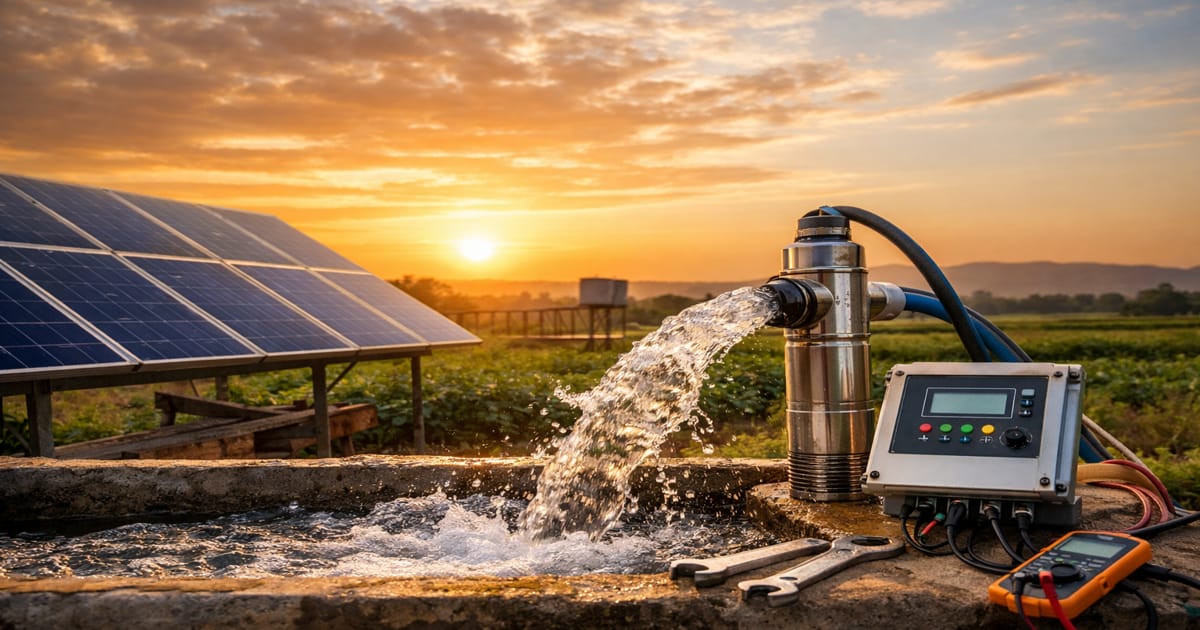
Solar water pumps are transforming irrigation, livestock watering, and rural water supply by using clean energy from the sun. From farms to homes and remote communities, solar pumps reduce dependence on grid electricity and fuel-powered pumps.
However, many beginners face challenges during installation and daily use. At the same time, myths and misinformation often create doubt about solar pumping systems.
The good news? Most solar pump issues are preventable and fixable.
This guide explains:
✔ Common solar pump problems
✔ Practical solutions and maintenance tips
✔ Solar pump myths vs reality
✔ How beginners can avoid costly mistakes
☀️ How a Solar Pump System Works
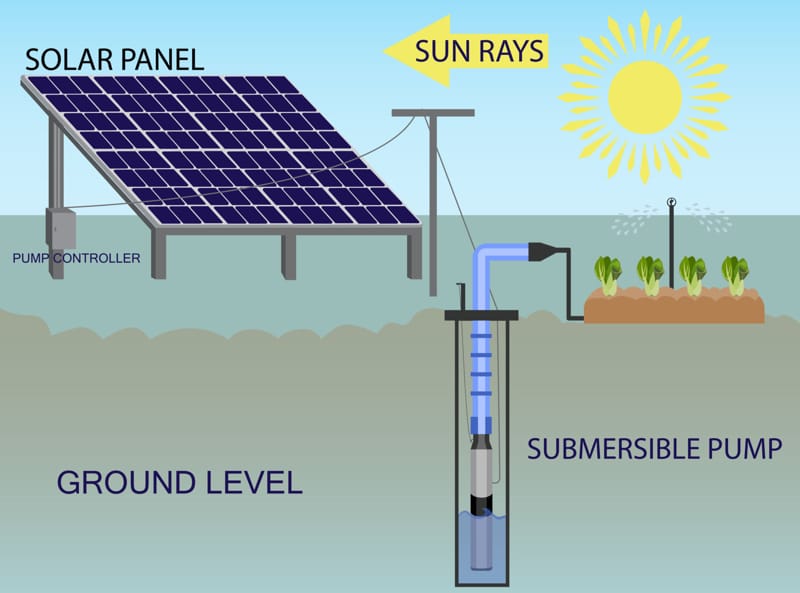
A typical solar pump system includes:
- Solar panels
- Pump controller (or inverter)
- DC or AC water pump
- Pipes and wiring
- Optional battery or water storage tank
Sunlight → Solar panels generate electricity → Controller regulates power → Pump moves water.
If any component is poorly sized, installed incorrectly, or not maintained, performance problems can appear.
🔧 Common Solar Pump Problems & Solutions
1) Low Water Flow
Problem: Pump delivers less water than expected.
Causes
- Insufficient sunlight
- Undersized solar panels
- Clogged filters or pipes
- Dropping water table level
Solutions
- Ensure proper panel sizing
- Clean filters and pipelines regularly
- Re-check water source depth
- Position panels for maximum sun exposure
👉 Many low-flow complaints are actually sizing issues.
2) Shading Issues
Problem: Output drops due to shadows or dust.
Causes
- Trees or buildings casting shade
- Dust or dirt on panels
Solutions
- Install panels in open sunlight areas
- Trim nearby vegetation
- Clean panels regularly
- Use MPPT controllers to reduce shading loss
👉 Even small shadows can reduce output significantly.
3) Pump Stops Frequently
Problem: Pump runs, then stops repeatedly.
Causes
- Controller protection mode
- Low voltage
- Dry-run protection
- Overheating
Solutions
- Check controller error codes
- Improve ventilation
- Confirm water availability
- Ensure adequate solar capacity
👉 Often this is a safety feature, not a failure.
4) Pump Not Working at All
Causes
- Loose wiring
- Blown fuse
- Controller fault
- Motor damage
Solutions
- Inspect all wiring connections
- Check fuse and breakers
- Test controller output
- Contact a technician if needed
👉 Electrical faults are common in new setups.
5) Battery & Storage Problems (Hybrid Systems)
Problem: Battery drains quickly or doesn’t charge.
Solutions
- Use quality deep-cycle batteries
- Install proper charge controllers
- Monitor voltage regularly
- Avoid over-discharging
👉 Poor battery quality causes many hybrid system issues.
6) Overloading Issues
Problem: Pump shuts down when handling heavy loads.
Solutions
- Match pump size to demand
- Use high-surge-capacity pumps
- Avoid oversizing loads
👉 Wrong sizing is a common beginner mistake.
7) Weather & Environmental Damage
Problem: Storms, heat, or dust damage the system.
Solutions
- Use strong mounting structures
- Inspect after storms
- Protect wiring and controllers
- Secure panels against strong winds
👉 Environmental protection increases system lifespan.
🧰 Solar Pump Maintenance Tips
Good maintenance prevents most problems.
✔ Clean panels every 2–3 months
✔ Inspect cables and pipes
✔ Check pump intake for debris
✔ Monitor water output trends
✔ Schedule yearly servicing
Solar pumps are low-maintenance, not zero-maintenance.
🌀 Solar Pump Myths vs Reality
Myth 1: Solar pumps don’t work on cloudy days
Reality: Output reduces but doesn’t stop. Hybrid systems can use batteries or grid backup.
Myth 2: Solar pumps are too expensive
Reality: Prices have dropped significantly. Long-term fuel savings make them cost-effective.
Myth 3: Solar pumps need constant maintenance
Reality: Only basic cleaning and periodic checks are needed.
Myth 4: Solar pumps can’t handle heavy loads
Reality: Modern pumps can run borewells, irrigation systems, and high-demand applications when properly sized.
Myth 5: Solar pumps break easily
Reality: Quality systems last many years. Most failures come from poor installation.
✅ Beginner Tips for Reliable Solar Pump Use
✔ Size panels correctly
✔ Keep panels clean
✔ Avoid shading
✔ Choose pumps with local service support
✔ Consider hybrid systems for reliability
✔ Check warranty and after-sales support
✔ Use trained installers
👉 Good planning prevents most issues.
🚩 When to Call a Professional
Call a technician if:
- Pump stops completely
- Water output drops suddenly
- Controller shows repeated errors
- Electrical smell or overheating occurs
Early repair prevents bigger losses.
🌱 Final Thoughts
Solar water pumps are a game-changer for agriculture, livestock, and rural water supply. They reduce energy costs, fuel dependency, and environmental impact.
Most problems are not due to solar technology itself but poor sizing, installation, or maintenance. With the right setup and care, a solar pump can operate reliably for 10–20+ years.
For beginners, understanding common problems, solutions, and myths builds confidence and ensures smarter decisions.
Solar pumps are not just a trend — they are a long-term water solution.
