



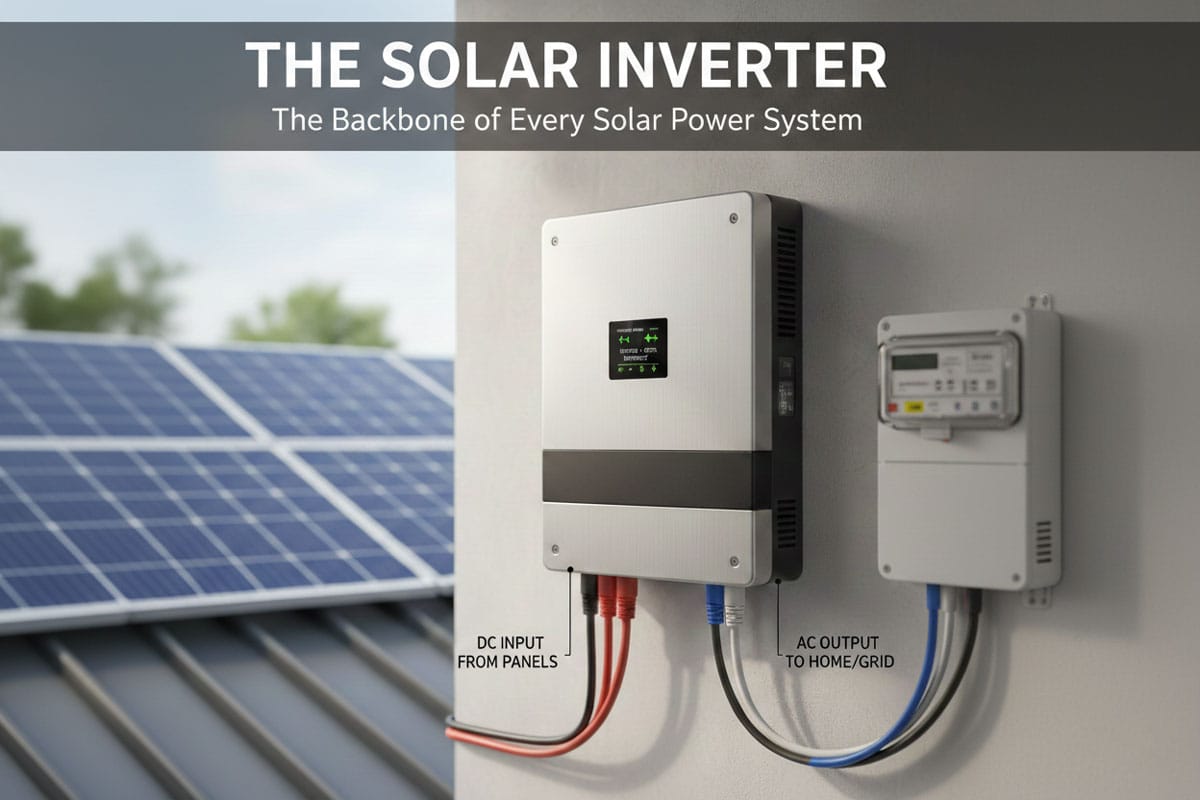
A solar inverter in Bangladesh plays a critical role in every solar installation, from rooftop systems in Dhaka to irrigation pumps in rural regions. The importance of a reliable solar inverter cannot be overstated.
Solar panels may capture sunlight, but without a solar inverter, that energy cannot power your home, office, factory, or farm. Whether you’re a homeowner, business owner, NGO, or industrial investor, understanding how solar inverters work is essential to getting the best return on your investment.
At Bangladesh Clean Energy Review, we aim to provide practical, locally relevant insights while keeping a global perspective. In this guide, we explain what solar inverters are, how they function, and how to choose the right one for Bangladesh’s climate and energy conditions.
What Is a Solar Inverter?
A solar inverter is the device that converts Direct Current (DC) electricity produced by solar panels into Alternating Current (AC) electricity used in homes and businesses.
In simple terms:
- Solar panels generate DC electricity.
- Homes, appliances, and the national grid use AC electricity.
- The inverter converts DC to AC so the power becomes usable.
Without an inverter, your solar system cannot function properly.
Why Solar Inverter in Bangladesh Is Critical for System Performance
Bangladesh faces:
- Frequent power outages in some regions
- Voltage instability
- High diesel generator costs
- Increasing electricity demand
- Growing rooftop solar installations
A properly selected inverter ensures:
- Stable voltage output
- Safe grid synchronization
- Higher system efficiency
- Better protection against electrical faults
In areas where grid reliability is a challenge, inverter quality becomes even more important.
Main Functions of a Solar Inverter
1. DC to AC Conversion
The inverter converts solar-generated DC electricity into AC electricity for household and commercial use.
2. Power Optimization (MPPT Technology)
Most modern inverters use Maximum Power Point Tracking (MPPT) technology. This ensures:
- Maximum energy extraction even during cloudy days
- Improved output during partial shading
- Better performance during Bangladesh’s monsoon season
3. Grid Connection
For grid-tied systems, the inverter synchronizes your system with the national grid. If net metering is enabled, excess electricity can be exported to the grid.
Bangladesh introduced net metering guidelines under the Sustainable and Renewable Energy Development Authority (SREDA), encouraging rooftop solar growth.
Types of Solar Inverters Used in Bangladesh
Different installations require different inverter technologies. Below are the most common types:
1. String Inverters
String inverters are widely used in residential and commercial solar systems in Bangladesh.
Multiple panels are connected in a “string,” and one inverter converts their combined DC output into AC.
Best for:
- Simple rooftop installations
- Commercial buildings
- Factories with large roof space
- Ground-mounted solar projects
Advantages:
- Cost-effective
- Easy maintenance
- Proven and reliable
Limitations:
- If one panel underperforms, it can affect the entire string
2. Microinverters
Microinverters are installed under each individual panel. Each panel works independently.
One globally recognized manufacturer in this segment is Enphase Energy, known for advanced monitoring systems.
Best for:
- Shaded rooftops
- Complex roof designs
- Small residential systems
Advantages:
- Panel-level monitoring
- Better performance in shading
- Reduced impact of single-panel failure
Limitations:
- Higher upfront cost
In Bangladesh, microinverters are less common but growing in premium residential projects.
3. Hybrid Inverters (Battery-Ready Systems)
Hybrid inverters combine solar and battery functionality. These are increasingly popular in Bangladesh due to:
- Load shedding
- Backup power needs
- Rural electrification
Hybrid inverters allow you to store excess solar energy for nighttime use or power outages.
Best for:
- Homes needing backup
- Hospitals and clinics
- Offices requiring uninterrupted power
- Remote areas
4. Central Inverters
Central inverters are used in large-scale commercial and utility solar projects.
These are common in:
- Solar parks
- Industrial-scale systems
- Government solar projects
Solar Inverter Efficiency: Why It Matters in Bangladesh
Efficiency directly impacts your energy savings.
If your inverter has low efficiency:
- More energy is lost
- ROI becomes slower
- Electricity savings reduce
Given Bangladesh’s high summer temperatures (often above 35°C), inverter thermal performance is extremely important. Choose inverters rated for high ambient temperatures.
Do not prioritize the lowest price. A poor-quality inverter may:
- Fail early
- Cause system shutdown
- Increase maintenance costs
Compliance and Standards
In many countries like Australia, inverters must meet standards set by the Clean Energy Council.
In Bangladesh, systems must comply with:
- SREDA net metering guidelines
- Bangladesh Energy Regulatory Commission (BERC) policies
- Utility interconnection requirements
Always verify certification and warranty support before purchasing.
Monitoring and Smart Features
Modern solar inverters offer:
- Mobile app monitoring
- Real-time energy tracking
- Fault detection alerts
- Historical performance reports
Monitoring is especially important for:
- Commercial and industrial users
- Solar irrigation projects
- Remote installations
Good monitoring helps detect problems early and maintain system performance.
Maintenance Tips for Bangladesh’s Climate
Bangladesh’s environment includes:
- High humidity
- Heavy rainfall
- Dust pollution
- Salinity in coastal regions
To extend inverter lifespan:
- Install in shaded, ventilated areas
- Avoid direct sun exposure
- Protect from flooding
- Schedule annual inspections
- Clean panels regularly
Proper installation significantly improves durability.
How to Choose the Right Solar Inverter
Before selecting an inverter, consider:
- System size
- Budget
- Roof design
- Shading conditions
- Need for battery backup
- Local service availability
- Warranty duration
Choose String Inverters If:
- Your roof is simple and unshaded
- You want a cost-effective solution
- It’s a commercial or industrial project
Choose Microinverters If:
- Your roof has shading issues
- You want panel-level monitoring
- It’s a small residential system
Choose Hybrid Inverters If:
- You need backup power
- You face frequent outages
- You want energy independence
Final Thoughts
The solar inverter is truly the backbone of any solar power system. While panels generate electricity, the inverter determines how efficiently and safely that electricity is used.
For Bangladesh’s growing renewable energy sector, selecting the right inverter is critical to:
- Maximizing savings
- Ensuring system reliability
- Reducing diesel dependence
- Supporting national clean energy goals
At Bangladesh Clean Energy Review, we encourage consumers and businesses to focus on quality, compliance, and long-term performance—not just price.
If you’re planning a solar installation, consult experienced professionals who understand both Bangladesh’s energy landscape and global solar standards.
Clean energy is not just the future—it’s already transforming Bangladesh.
