



The Future of Solar Energy: Latest Technologies Revolutionizing Clean Power
Introduction
The future of solar energy is transforming the global power landscape at an unprecedented pace. Breakthrough innovations in photovoltaic materials, advanced battery storage, artificial intelligence, and smart energy management systems are reshaping how electricity is generated and consumed. As countries shift toward renewable energy, the future of solar energy is becoming more efficient, affordable, and scalable than ever before.
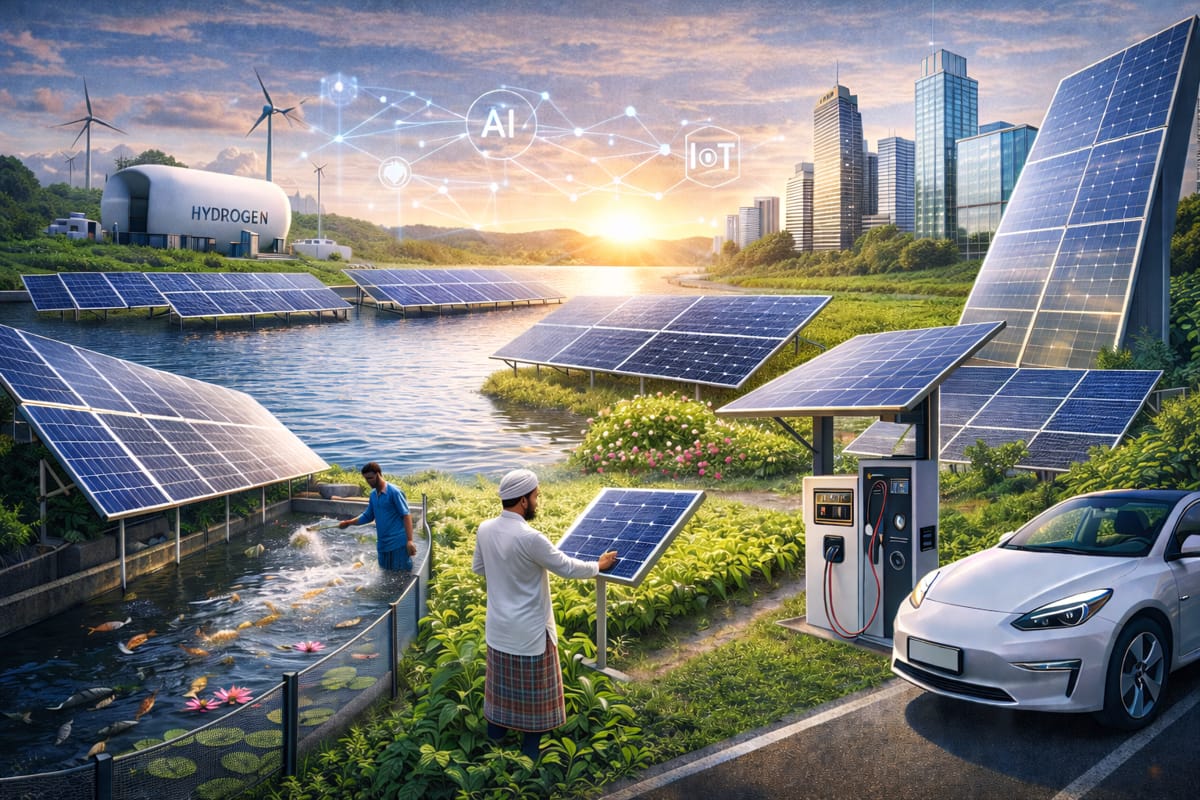
From next-generation solar panels to floating solar farms and multifunctional agricultural systems, these advancements are not only increasing efficiency but also expanding the practical applications of solar power. In developing nations like Bangladesh, these innovations are crucial for energy security, rural electrification, and sustainable economic growth.
In this article, we explore the most cutting-edge technologies shaping the future of solar energy, including advanced solar cells, energy storage breakthroughs, smart monitoring systems, agrovoltaics, solar aquaculture, and multifunctional solar solutions.
1. Next-Generation Solar Panel Technologies
Technological advancement in photovoltaic cells lies at the heart of the future of solar energy.
N-Type Solar Cells
Traditional panels use P-type silicon, but N-type solar cells offer:
- Higher efficiency
- Lower degradation rates
- Longer lifespan
They perform better in high-temperature and high-humidity environments, making them ideal for South Asian climates.
Heterojunction (HJT) Solar Cells
HJT combines crystalline silicon with amorphous silicon layers to increase efficiency and temperature resistance. This makes HJT technology suitable for commercial and industrial installations where performance stability is essential.
TOPCon Technology
TOPCon (Tunnel Oxide Passivated Contact) significantly reduces recombination losses and boosts output efficiency beyond 24%.
Major manufacturers like LONGi and JinkoSolar are actively commercializing TOPCon modules to strengthen the future of solar energy worldwide.
Bifacial Solar Panels
Bifacial modules absorb sunlight from both sides, increasing energy production by up to 20%.
Ideal for:
- Solar farms
- Reflective surfaces
- Floating solar installations
Perovskite Solar Cells
Perovskite solar technology promises:
- Lower production costs
- Higher theoretical efficiency
- Lightweight applications
Researchers globally are working to commercialize stable perovskite modules, potentially revolutionizing solar manufacturing.
2. Solar Energy Storage Innovations
Energy storage is essential to ensure reliability in the future of solar energy.
Advanced Lithium Batteries
Modern battery systems like the Tesla Powerwall 3 and solutions from BYD offer:
- Higher storage capacity
- Faster charging
- Longer lifespan
Solid-State Batteries
Solid-state batteries replace liquid electrolytes with solid materials, improving:
- Safety
- Durability
- Energy density
This innovation could dramatically enhance solar storage systems.
Hydrogen-Based Solar Storage
Green hydrogen allows long-term energy storage. According to the International Energy Agency, hydrogen will play a critical role in decarbonizing power systems globally.
Hydrogen storage represents a strategic pillar in the future of solar energy.
3. Solar Energy Management System (SEMS)
A Solar Energy Management System (SEMS) is becoming central to the future of solar energy. These intelligent systems monitor, analyze, and optimize solar installations in real time.
Key functions include:
- Performance monitoring
- Fault detection
- Energy analytics
- Predictive maintenance
- Remote system control
AI-enabled Solar Energy Management Systems improve operational efficiency and reduce downtime. For countries like Bangladesh, SEMS technology ensures maximum return on solar investments while minimizing technical losses.
4. Smart Solar Technology & AI Integration
Artificial intelligence is accelerating the future of solar energy through automation and predictive optimization.
AI-Enhanced Solar Monitoring
AI platforms can:
- Detect inefficiencies
- Predict inverter failures
- Optimize load distribution
- Integrate with smart grids
This reduces maintenance costs and increases energy yield.
Solar-Powered IoT Devices
Solar IoT solutions now power:
- Smart agriculture
- Remote communication systems
- Street lighting
- Environmental monitoring
5. Floating Solar Farms (Floatovoltaics)
With land scarcity becoming a global concern, floating solar farms provide a sustainable solution by utilizing water surfaces.
Countries such as:
- Bangladesh
- China
- India
- Netherlands
are investing heavily in floating photovoltaic systems.
Floating solar reduces evaporation, improves panel cooling, and increases energy efficiency — a strong indicator of the future of solar energy innovation.
6. Agrovoltaics (Agrivoltaics)
Agrovoltaics — also known as agrivoltaics — integrates solar panels with agricultural production.
Benefits include:
- Simultaneous crop cultivation and energy generation
- Reduced water evaporation
- Increased land productivity
- Farmer income diversification
In densely populated agricultural countries, agrovoltaics represents a powerful component of the future of solar energy by maximizing land use efficiency.
7. Solar Aquaculture (Solar Aqua Culture)
Solar aquaculture combines solar installations with fish farming operations.
Advantages:
- Solar panels provide shade, reducing water temperature stress
- Electricity powers aerators and pumps
- Dual income from energy and aquaculture
Solar aqua culture enhances sustainability while supporting rural economic development.
8. Multifunctional Solar Systems
The future of solar energy is not limited to electricity production. Multifunctional solar systems integrate:
- Solar pumping
- Solar irrigation
- Solar lighting
- EV charging
- Battery storage
- Smart monitoring
These integrated systems are particularly valuable in rural and off-grid areas, offering complete energy ecosystems instead of standalone installations.
9. Solar Applications Beyond Power Generation
Solar Windows & Transparent Panels
Buildings can now generate electricity using transparent solar glass, turning skyscrapers and homes into vertical power plants.
Solar Roads & Pavements
Pilot projects in France and United States are experimenting with solar roads to power infrastructure.
Solar-Powered EV Charging Stations
Solar EV charging stations enable vehicles to charge using renewable energy, reducing grid dependency and emissions.
Why the Future of Solar Energy Matters
The future of solar energy ensures:
- Reduced carbon emissions
- Lower electricity costs
- Energy independence
- Sustainable economic development
- Climate resilience
For developing nations, adopting advanced solar technologies such as Solar Management Systems, agrovoltaics, and multifunctional solar solutions can dramatically accelerate clean energy transitions.
Conclusion
The future of solar energy is defined by innovation, integration, and intelligence. From next-generation solar panels and AI monitoring systems to hydrogen storage, agrovoltaics, and solar aquaculture, solar technology is evolving beyond traditional electricity generation.
As governments and industries invest in renewable energy infrastructure, these advancements will shape the next era of global power production. The future of solar energy is not just about cleaner electricity — it is about smarter systems, multifunctional applications, and sustainable development for generations to come.
