



Introduction
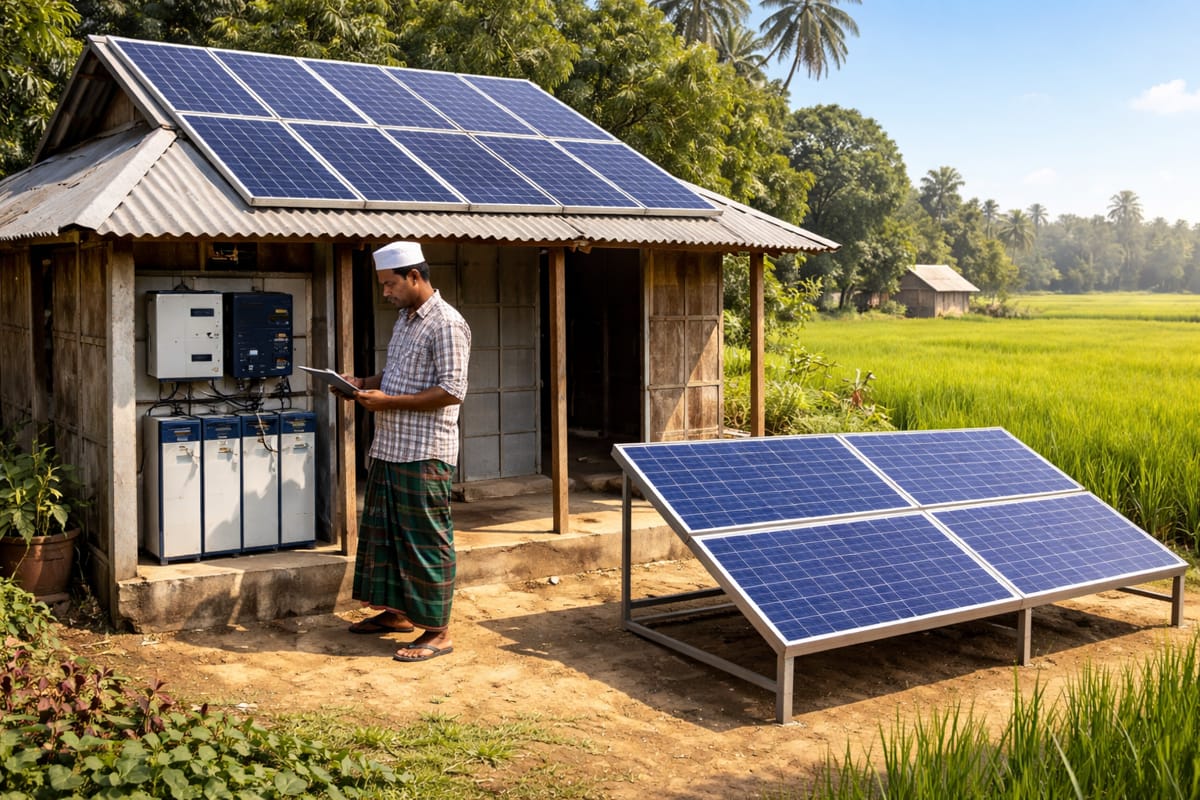
Off-grid solar systems in Bangladesh are revolutionizing the way homes, farms, and businesses generate electricity. With rising fuel costs and frequent power outages, these systems provide reliable and independent energy solutions across rural and urban areas.
Bangladesh has already installed over six million Solar Home Systems (SHS), making it one of the world’s leading adopters of decentralized solar energy. Today, modern off-grid solar systems in Bangladesh are more powerful, scalable, and cost-effective than ever.
In this complete guide, you will discover:
What an off-grid solar system is
Key components and how they work
Pricing in Bangladesh
Best off-grid solar brands
Installation and future trends
1. What Is an Off-Grid Solar System in Bangladesh?
An off-grid solar system generates and stores electricity independently without relying on the national power grid. It ensures uninterrupted electricity even during power outages or in remote rural areas.
Key Components of an Off-Grid Solar System
A typical off-grid solar system in Bangladesh includes:
1. Solar Panels
Convert sunlight into direct current (DC) electricity.
2. Off-Grid Inverter
Converts DC electricity into alternating current (AC) for appliances.
3. Battery Storage
Stores excess energy for nighttime or cloudy days.
4. Solar Charge Controller
Regulates voltage and prevents battery overcharging.
5. Backup Generator (Optional)
Provides additional power during extended low sunlight periods.
These components work together to deliver continuous, independent power.
2. Why Off-Grid Solar Systems Are Growing in Bangladesh
The demand for off-grid solar systems in Bangladesh is increasing due to several critical factors.
Reliable Power in Remote Areas
Many villages, islands (chars), and rural communities lack stable grid electricity. Off-grid solar ensures 24/7 power for lighting, refrigeration, education, and healthcare.
Protection from Load Shedding
Frequent electricity shortages affect households and businesses. A properly sized solar battery system eliminates dependency on unpredictable supply.
Reduced Diesel Generator Costs
Diesel fuel is expensive and environmentally harmful. Off-grid solar systems significantly reduce long-term fuel expenses.
Government Incentives & IDCOL Support
The Bangladesh government, along with IDCOL, provides subsidies and financing programs to promote renewable energy adoption.
Clean & Sustainable Energy
Solar power reduces carbon emissions and supports Bangladesh’s renewable energy goals.
3. How to Choose the Best Off-Grid Solar System in Bangladesh
Selecting the right off-grid solar system depends on energy demand, weather conditions, and budget.
1. Solar Panel Efficiency
Bangladesh’s hot climate and monsoon season require high-quality monocrystalline or bifacial panels that perform efficiently under varying weather.
2. Battery Storage Capacity
For uninterrupted supply, a minimum 10–15 kWh battery bank is recommended for medium households. Lithium-ion batteries offer longer lifespan and higher efficiency.
3. Inverter Capacity
Choose a pure sine wave inverter compatible with refrigerators, fans, air conditioners, and sensitive electronics.
4. Scalability
Your system should allow future expansion as energy consumption increases.
5. Warranty & After-Sales Support
Top off-grid solar brands in Bangladesh offer 5–15 years warranty and professional maintenance support.
4. Best Off-Grid Solar Systems in Bangladesh (2025)
Here are the top off-grid solar systems available in Bangladesh:
1. Solaric Solar Home System (SHS)
Capacity: 50W–500W
Best for: Rural homes, small shops
Pros: Affordable, government-supported
Cons: Limited capacity
2. Rahimafrooz Solar System
Capacity: 3–15 kWh
Best for: Medium homes, farms, schools
Pros: Durable panels, reliable lithium batteries
Cons: Higher upfront cost
3. Walton Solar Off-Grid Solution
Capacity: 5–20 kWh
Best for: Large homes, commercial projects
Pros: Scalable, generator compatible
Cons: Requires battery storage space
4. Growatt Off-Grid System
Capacity: 10 kWh+ (customizable)
Best for: Industrial applications
Pros: Advanced inverter technology
Cons: Premium pricing
5. Sungrow Hybrid Off-Grid System
Capacity: 7–25 kWh
Best for: Residential and commercial setups
Pros: Smart energy optimization
Cons: Higher initial investment
5. Off-Grid Solar System Cost in Bangladesh
The cost of an off-grid solar system in Bangladesh depends on system size and battery capacity.
Estimated Price Range:
Small Solar Home System: ৳50,000 – ৳100,000
Medium Household System: ৳150,000 – ৳400,000
Large Off-Grid Setup: ৳500,000 – ৳1,500,000
Installation Considerations
Professional installation is highly recommended.
Financing and government subsidies may reduce initial investment.
Proper system sizing ensures long-term savings.
6. Future of Off-Grid Solar in Bangladesh
The off-grid solar market in Bangladesh is evolving rapidly.
AI-Optimized Solar Systems
Smart energy monitoring improves efficiency and predictive maintenance.
Floating Solar Projects
Floating solar farms on rivers and lakes are expanding rural energy access.
Green Hydrogen Storage
Hydrogen-based energy storage may replace lithium batteries for industrial-scale projects.
Frequently Asked Questions (FAQ)
What is the average cost of an off-grid solar system in Bangladesh?
The average cost ranges from ৳50,000 for small systems to over ৳1,500,000 for large commercial setups.
How long do solar batteries last?
Lithium-ion batteries typically last 8–15 years depending on usage and maintenance.
Is off-grid solar suitable for rural Bangladesh?
Yes. Off-grid solar systems are ideal for rural and remote areas without reliable grid access.
Can I expand my off-grid solar system later?
Most modern systems are scalable and allow additional panels and batteries.
Conclusion
Off-grid solar systems in Bangladesh are providing reliable, cost-effective, and environmentally friendly electricity solutions for households, farms, and businesses.
With trusted brands like Solaric, Rahimafrooz, Walton, Growatt, and Sungrow, energy independence is now more accessible than ever.
Investing in an off-grid solar system today means securing long-term savings, protection from load shedding, and contributing to a cleaner and greener Bangladesh.
