



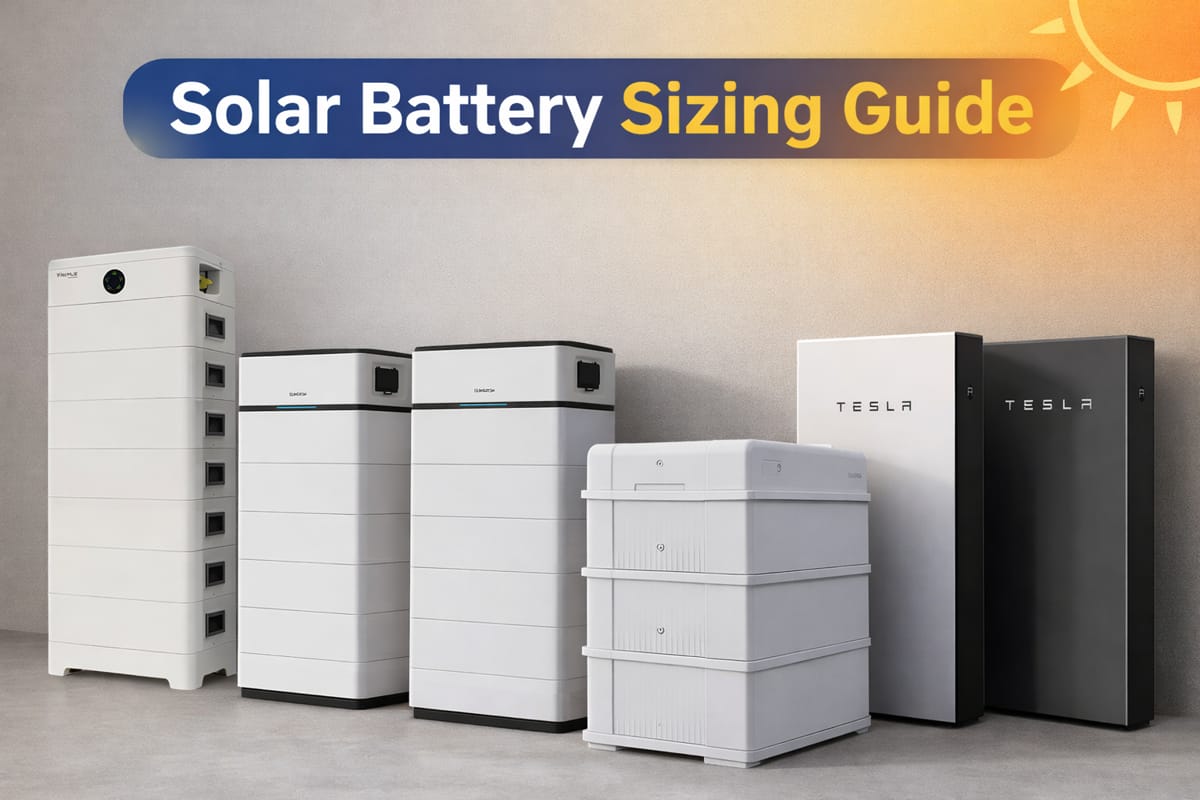
Solar battery sizing decisions can make or break your solar investment. Choosing the correct battery capacity allows you to store more daytime solar energy, reduce peak electricity bills, and ensure reliable backup power during outages.
In this complete Solar Battery Sizing Guide, we explain how battery sizing works, the difference between fixed-size and modular systems, and how leading options like Tesla Powerwall 3, Sungrow SBR, Sungrow SBH, and SolaX Triple Power scale to match different household energy needs.
Whether you’re installing a new solar system or upgrading with battery storage, this guide will help you size your system correctly the first time.
Why Solar Battery Sizing Matters
A properly sized battery directly impacts:
- Night-time energy coverage
- Peak tariff savings
- Backup power duration during outages
- Long-term return on investment
- Future expandability
Oversizing increases upfront cost unnecessarily.
Undersizing limits performance and savings.
The goal of this Solar Battery Sizing Guide is simple: match battery capacity to real energy usage and future plans.
Understanding Solar Battery Capacity (kWh Explained)
Battery capacity is measured in kilowatt-hours (kWh). This represents how much energy a battery can store and deliver.
For example:
- 5 kWh = small essential-load backup
- 10–15 kWh = typical home night coverage
- 20–40 kWh = larger homes or higher independence goals
To estimate your ideal battery size, consider:
- Average nightly electricity usage
- Peak electricity tariff rates
- Backup requirements
- EV charging plans
- Air-conditioning load
- Future appliance upgrades
Fixed-Size vs Modular Solar Batteries
When following this Solar Battery Sizing Guide, you’ll notice batteries fall into two main categories.
Fixed-Size Batteries
A fixed-size battery is a single unit with set storage capacity. It offers simplicity, clean installation, and predictable performance.
Best for:
- Straightforward sizing decisions
- Reliable overnight coverage
- Clean expansion pathways
Modular Batteries
Modular systems grow in blocks. You begin with a base configuration and expand by adding modules.
Best for:
- Budget flexibility
- Growing households
- Future EV charging
- Increasing independence over time
Both approaches work well. The right choice depends on how much flexibility you want.
Tesla Powerwall 3 (Fixed-Size with Expansion Option)
Tesla Powerwall 3 combines fixed sizing with expansion capability through Expansion Packs.
Capacity Breakdown
- Base usable capacity: 13.5 kWh
- Each Expansion Pack adds: 13.5 kWh
- Maximum Expansion Packs: 3
- Maximum total storage: 54 kWh
Practical Sizing Steps
- 13.5 kWh (single battery)
- 27 kWh (1 Expansion Pack)
- 40.5 kWh (2 Expansion Packs)
- 54 kWh (3 Expansion Packs)
Powerwall 3 suits households wanting strong overnight coverage with a clear upgrade path.
Sungrow SBR (Modular System)
Sungrow SBR is designed for gradual scaling.
Module Details
- Module size: 3.2 kWh
- Minimum configuration: 6.4 kWh (2 modules)
- Maximum per stack: 25.6 kWh (8 modules)
- Maximum total system: 102.4 kWh
SBR is ideal for homeowners wanting mid-size starting capacity and long-term expansion flexibility.
Sungrow SBH (High-Capacity Modular Platform)
Sungrow SBH targets larger builds and higher independence goals.
Module Details
- Module size: 5 kWh
- Minimum configuration: 20 kWh
- Maximum per stack: 40 kWh
- Maximum total storage: 160 kWh
SBH works well for:
- Larger homes
- Heavy night loads
- Strong backup needs
- Small commercial setups
SolaX Triple Power (Flexible Modular Option)
SolaX Triple Power uses 5.1 kWh modules and scales in practical steps.
Capacity Overview
- Module size: 5.1 kWh
- Common starting sizes: 10.2 kWh, 15.3 kWh
- Expandable depending on tower configuration
SolaX is popular for homeowners who prefer to start practical and expand later instead of oversizing upfront.
Solar Battery Sizing Guide Comparison Table
| Battery System | Base Size | Expandable | Maximum Capacity |
|---|---|---|---|
| Powerwall 3 | 13.5 kWh | Yes | 54 kWh |
| Sungrow SBR | 6.4 kWh | Yes | 102.4 kWh |
| Sungrow SBH | 20 kWh | Yes | 160 kWh |
| SolaX Triple Power | 10.2 kWh | Yes | Model dependent |
How to Choose the Right Battery Size (Step-by-Step)
Step 1: Review Your Electricity Bill
Check average daily consumption and identify peak usage hours.
Step 2: Calculate Night Usage
Most savings come from covering evening demand.
Step 3: Decide Backup Level
Choose between essential loads backup or full-home backup.
Step 4: Plan for the Future
Consider EV chargers, appliance upgrades, or additional air conditioning.
Following this Solar Battery Sizing Guide ensures your system delivers long-term value and performance.
Are These Solar Batteries Eligible for Rebates?
Eligibility depends on:
- Location and available state programs
- Installation timing
- System configuration
- Previous rebate claims at the property
Confirm eligibility before installation to avoid complications.
Custom Solar Battery Installation Options
Custom installation is available for:
- Battery-only upgrades
- Solar + battery packages
- EV-ready energy systems
Proper sizing is based on:
- Usage data
- Tariff structure
- Backup goals
- Budget
- Long-term household plans
Correct system design ensures measurable performance — not just added capacity.
Frequently Asked Questions
What size solar battery do I need?
Most homes require 10–20 kWh depending on nightly usage and independence goals.
Is 13.5 kWh enough for a home?
For many average households, yes. Larger homes may require 27 kWh or more.
Can I expand my solar battery later?
Yes. Modular systems expand by adding modules. Powerwall 3 expands using Expansion Packs.
Is modular better than fixed size?
Modular offers flexibility. Fixed size offers simplicity. The best choice depends on your expansion plans.
Final Thoughts
This Solar Battery Sizing Guide shows that the right battery size depends on real energy usage, backup expectations, and future expansion plans.
Whether you choose a fixed-size system like Powerwall 3 or a modular platform like Sungrow or SolaX, proper sizing ensures:
- Lower electricity bills
- Better solar self-consumption
- Reliable backup power
- Long-term energy independence
If you need tailored advice, book a consultation with a battery specialist to design the right capacity for your home.
